


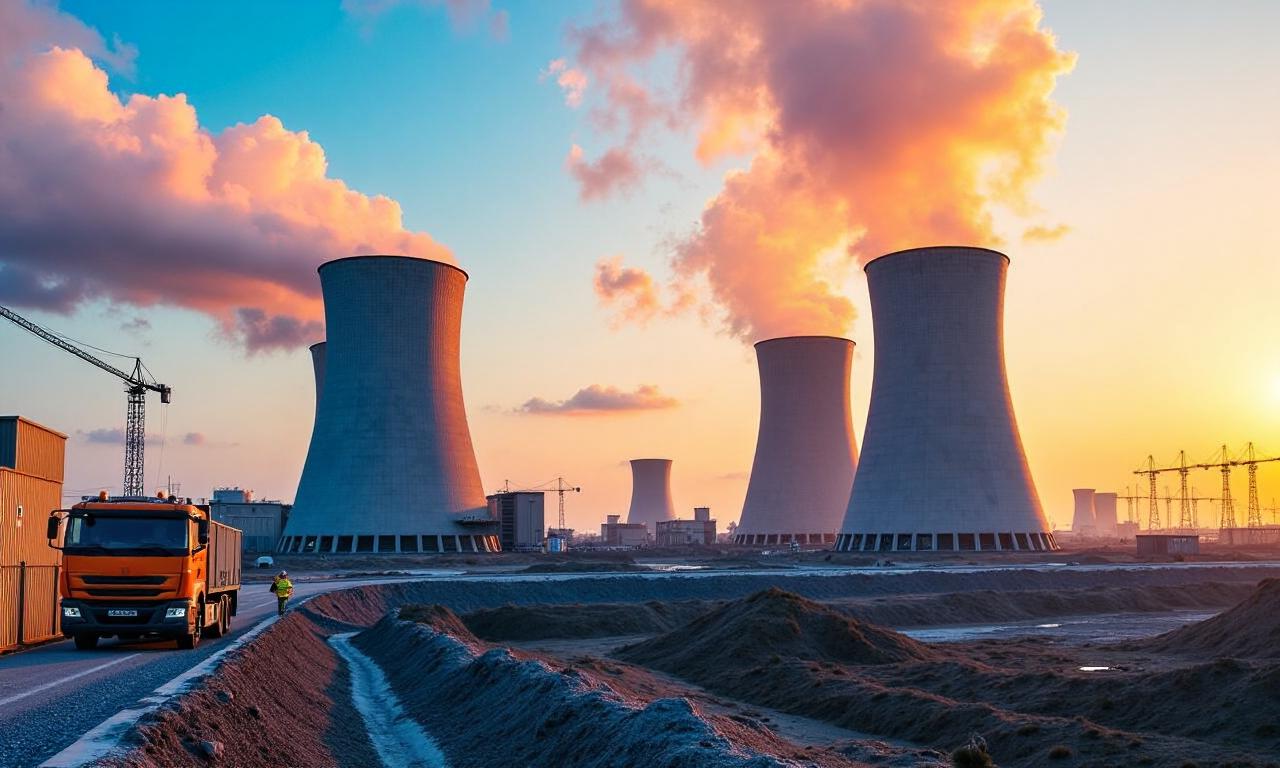
Work begins on nuclear power station that promises 8,000 jobs
The UK government has launched construction on a new nuclear facility, set to generate 8,000 employment opportunities, according to recent announcements. The site for this development, Wylfa on Anglesey, was selected following a £2.5bn collaboration with Rolls-Royce, finalized last year. The company projected that the project will establish 3,000 local jobs at the site and an additional 5,000 roles across the country.
Tom Greatrex, chief executive of the Nuclear Industry Association, highlighted the significance of the initiative, stating it would enable the UK to introduce its first small modular reactors (SMRs). These reactors are produced in a factory as modular components and later assembled at the location. The trio of units is anticipated to supply energy for approximately 3 million households for over six decades.
“This marks the start of a transformative era for clean energy, industrial expansion, and high-skilled employment in Wales,” Greatrex remarked, emphasizing that Wylfa is a “remarkable location with distinct advantages.” He also noted the industry’s preparedness to ensure the success of the nation’s inaugural SMR network, positioning the UK as a leader in nuclear innovation.
The project is pending a final investment decision, slated for the early 2030s, though regulatory and planning challenges have been addressed. Once operational, the SMRs are expected to become a key part of the UK’s energy infrastructure. Wylfa, situated along the Anglesey coast in northwest Wales, functioned as a nuclear plant for 44 years, generating electricity since 1971 after its construction in the 1960s.
In 2015, the site’s final reactor ceased operations, initiating its decommissioning process. Replacement plans were previously considered but were abandoned in 2021 before fresh proposals emerged in 2024. Chris Cholerton, Rolls-Royce SMR chief executive, praised the agreement as a testament to the UK’s “golden age of new nuclear,” underscoring the use of British technology and the clarity it brings to the SMR programme. He mentioned that an early works deal signed last year facilitated initial activities in Czechia.

“This development represents a pivotal moment for the UK’s energy independence,” said Ed Miliband, Energy Secretary. “Our commitment to clean energy is essential for reducing reliance on fossil fuels and reclaiming control over the nation’s power supply.”
With the project moving forward, it is anticipated to deliver substantial investment to both the local area and the broader UK economy, ensuring a steady source of low-carbon energy for the long term. The announcement underscores the government’s focus on sustainable power solutions and the potential for Wylfa to become a cornerstone of this strategy.