


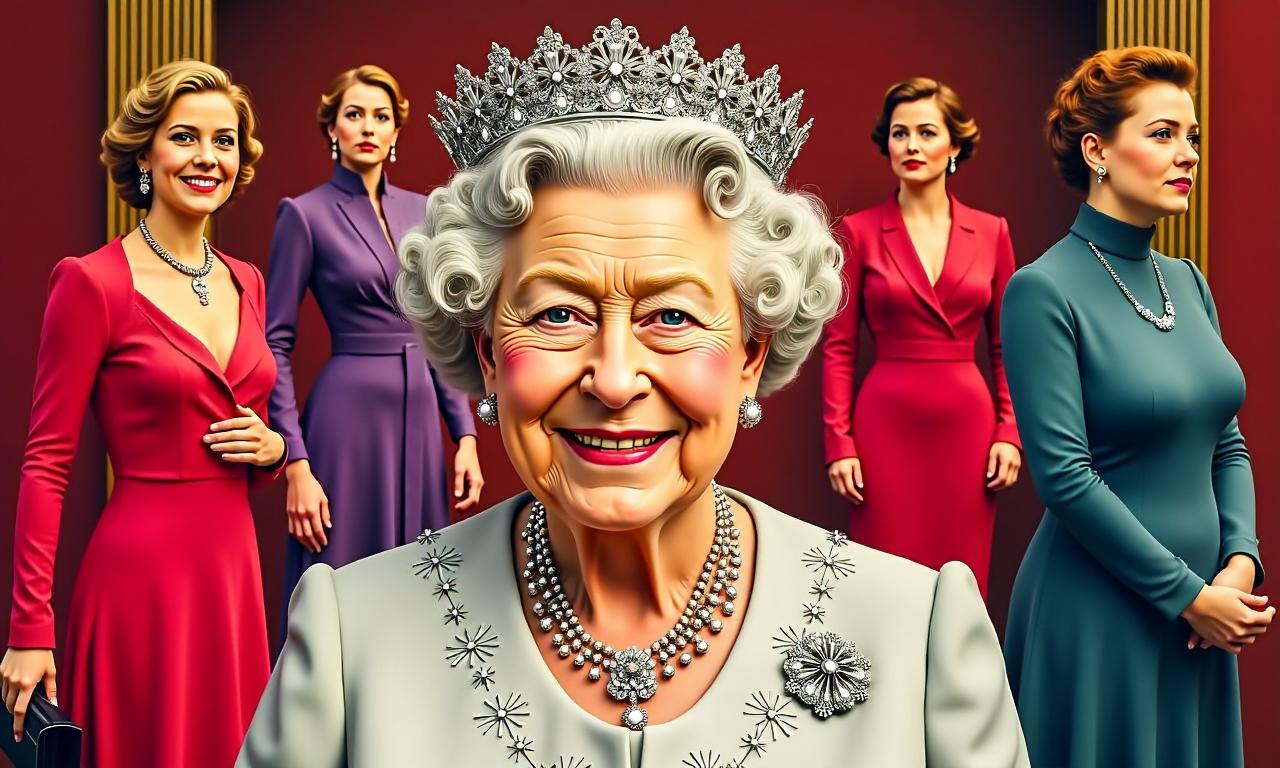
Five of Queen Elizabeth II’s Most Iconic Outfits – from New Royal Exhibit
Queen Elizabeth II, a towering figure in global history, crafted a style that blended restraint with unmistakable presence. Her clothing, often conservative yet deeply symbolic, became a visual language of authority and tradition. From the iconic headpieces she donned during public engagements to the muted tones of her everyday attire, her fashion choices reflected a lifelong commitment to national identity and diplomatic grace. A recent exhibition at The King’s Gallery in Buckingham Palace highlights this legacy, featuring 200 items spanning her 10 decades of service and marking the centenary of her birth on 10 April.
The Harris Tweed Jacket and Balmoral Skirt
One of the Queen’s most enduring looks was a Harris tweed jacket paired with a Balmoral Tartan skirt, first worn in the 1950s. Designed by her longtime dressmaker Norman Hartnell, the ensemble was practical for her love of outdoor activities while maintaining a modest appearance. Yet, its significance extended beyond functionality, as royal fashion expert Marian Kwei explains:
“The fabrics used were intended to ‘promote British fashion, excellence and production’… woven into the feminine cut and low-key tones are connotations of ‘stability, dependence, soft power’.” “It’s ‘I’m in charge’, without being too loud about it.”
Kwei notes that the traditional design, though not overtly trendsetting, helped project a sense of continuity and reliability. This look has since been celebrated as a quintessentially British emblem, influencing contemporary designers like Miu Miu, who reimagined it in their 2024 Balmoral collection.
The Coronation Dress
Among the standout pieces is her 1953 Coronation dress, crafted by Hartnell using silk from Kent. Adorned with gold bugle beads, diamantés, and pearls, the garment showcased exquisite British craftsmanship. The design also carried symbolic weight, incorporating the floral emblems of the UK’s four nations and later adding symbols from across the Commonwealth. As Kwei remarks, the dress “was pretty much a nod to Britain and the Commonwealth,” embodying the Queen’s role as a unifying figure.

The 1957 Green Gown
A sleeveless green gown from 1957, also by Hartnell, was worn during a state banquet for US President Dwight Eisenhower in Washington DC. While its design is undeniably elegant, de Guitaut notes its message is more enigmatic:
“It’s absolutely beautiful… but I can’t quite see an overt reference in it to be honest.”
Yet, the choice of “apple crisp green” may have subtly honored American culture, linking it to the nickname “The Big Apple” for New York. Kwei suggests the color conveyed a message of shared values, stating, “It says, ‘I’m Britain’s sovereign, this is us, but I’m also nodding to you’.”
A Royal Fashion Legacy
Elizabeth Holmes, an author and royal fashion commentator, highlights how the Queen used her wardrobe to assert her place on the global stage early in her reign. “She used her clothing to ‘establish herself in a new way, a glamorous young woman’ on a male-dominated world stage,” Holmes observes. Hartnell’s designs, with their fitted waists and full skirts, emphasized her femininity, rather than disguising it. This approach became a hallmark of her public image, intertwining personal style with national symbolism.