


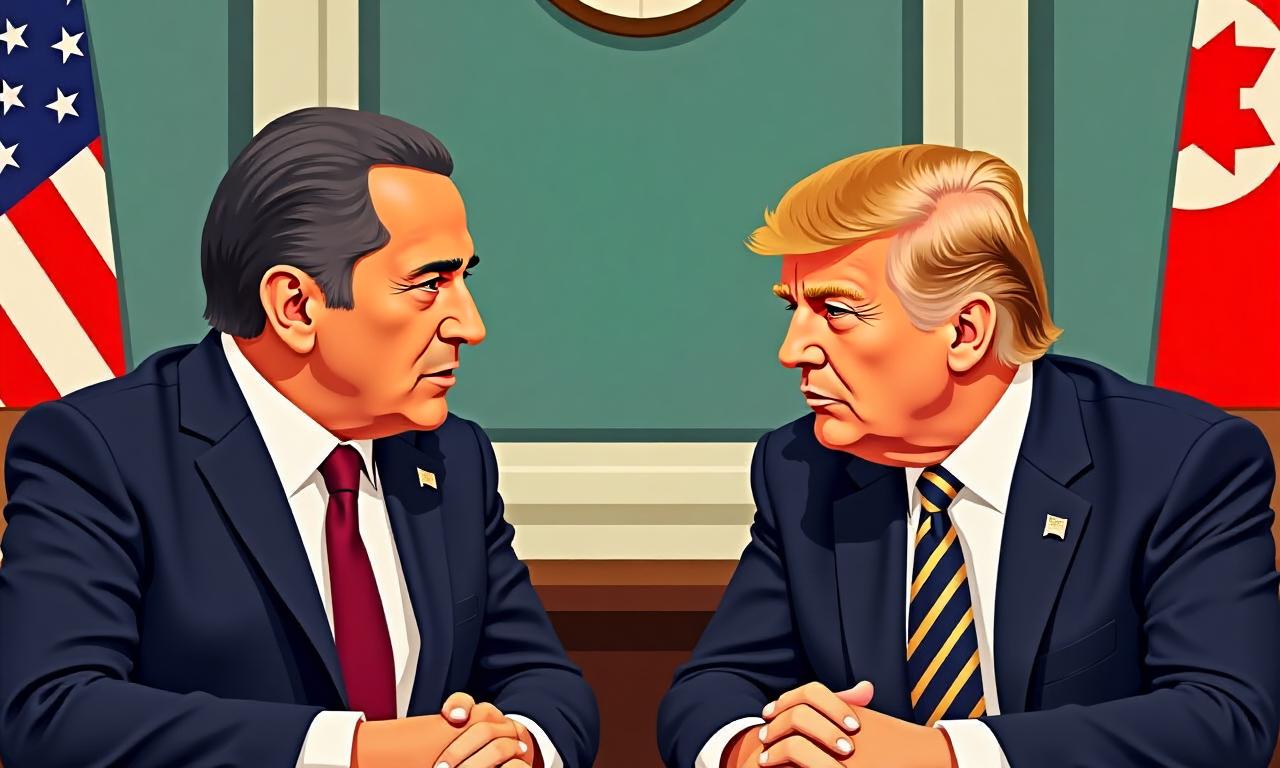
Historic Talks Between Vance and Ghalibaf Signal Shift in US-Iran Relations
A landmark meeting between US Vice President JD Vance and Iran’s Parliamentary Speaker Mohammad Bagher Ghalibaf in Islamabad this weekend could redefine the fragile relationship between the two nations. The event, set to take place amid ongoing global tensions, represents the first high-level face-to-face engagement since the 1979 Islamic Revolution fractured decades of strategic unity. While the photograph capturing this moment may not depict smiles or handshakes, its symbolic weight will endure, signaling a shared desire to resolve the conflict through diplomacy rather than continued hostilities.
Legacy of Distrust and Broken Ceasefires
Despite the high stakes, the current ceasefire between Israel and Iran remains precarious, with Trump’s prediction of a “peace deal” within two weeks already seeming unrealistic. The terms of the agreement faced immediate challenges, and Iran’s last-minute hesitations kept the outcome uncertain. Meanwhile, Israel’s refusal to commit to a lasting truce in Lebanon added to the complexity. This backdrop underscores the difficulties of achieving lasting peace, even as both sides seek to avoid further escalation.
“The presence of senior officials and the high cost of failure could unlock new pathways, but the situation is still exponentially more difficult than before,” notes Ali Vaez of the International Crisis Group, reflecting on years of political maneuvering and shifting alliances.
Recent negotiations in February 2025 saw some progress, but the shadow of the Israeli-American war loomed large. The talks, conducted indirectly via Oman, highlighted Iran’s preference for a mediated approach. While direct dialogue occurred behind closed doors in Geneva, hardline factions in Tehran resisted, fearing humiliation or concessions. This skepticism has shaped the pace of negotiations, complicating efforts to reach a breakthrough.
Divergent Styles and Strategic Shifts
Trump’s team, led by special envoy Steve Witkoff and Jared Kushner, has relied on a distinctive negotiation style—often arriving unannounced and bypassing traditional diplomatic protocols. In contrast, Iran’s insistence on indirect talks through Oman reflects a cautious strategy, distancing itself from perceived pro-Israel influences. The earlier Abraham Accords, which normalized ties between Israel and Arab states, are seen as a factor in this divergence, prompting Iran to elevate its engagement with Vance, a key skeptic of the military campaign within the Trump administration.

The contrast with past negotiations is stark. A decade ago, the US and Iran delegations included seasoned diplomats and leading physicists, supported by European allies and UN Security Council members. Today, the focus remains on high-stakes diplomacy, with the IAEA’s technical expertise and mediators from other nations playing critical roles in recent discussions. Yet, the enduring gaps between the two sides suggest that significant progress may still be elusive.