


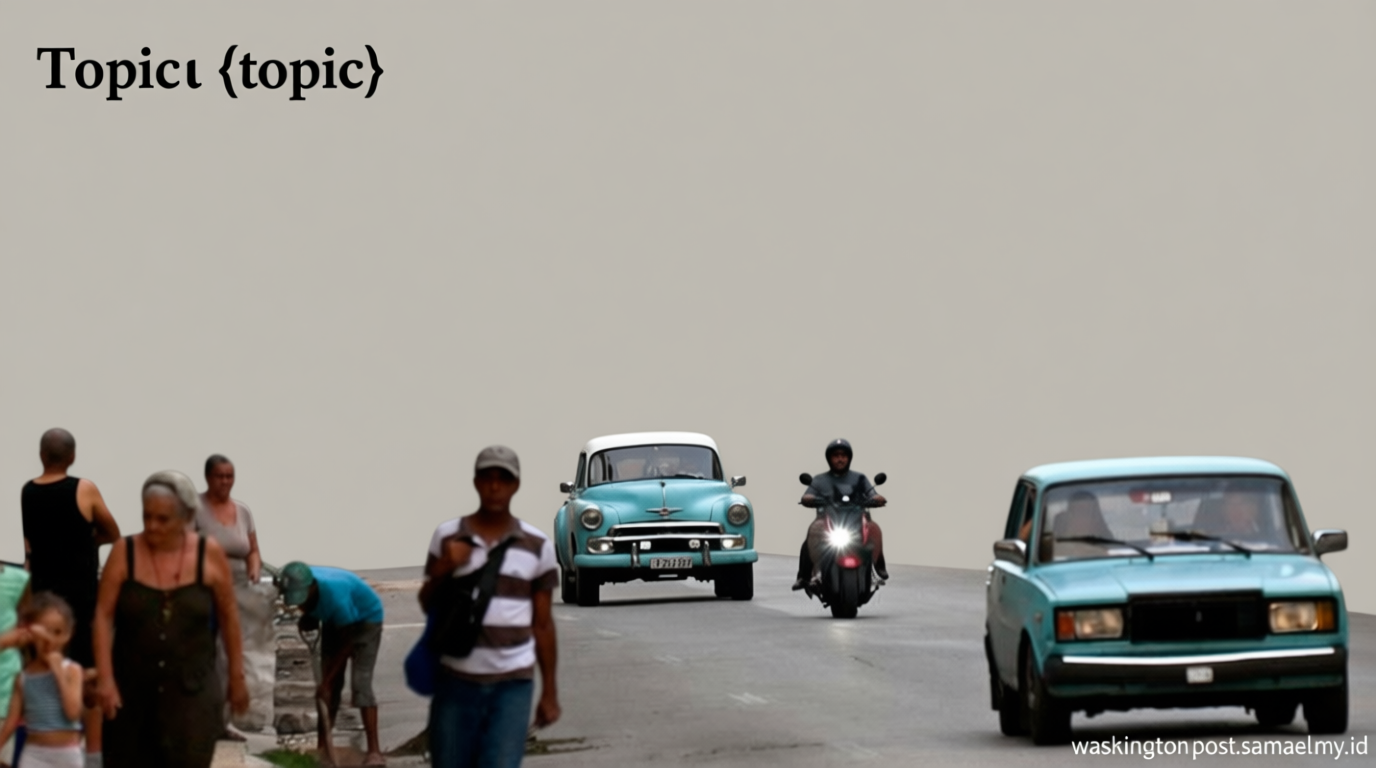
‘We can’t take it anymore’: How Trump is pushing Cuba to the brink
During a quiet moment on Havana’s streets, a Cuban man leaned close, his words barely audible as if conveying a closely guarded truth. “Let the Americans come, let Trump come, it’s time to get this over with,” he murmured. This sentiment carries weight in Cuba, where the country has faced relentless challenges since Fidel Castro’s revolution. Yet the current tensions feel sharper, driven by a U.S. president whose rhetoric echoes Cold War-era aggression.
The Cuban government’s struggle with economic hardship is not new. For over six decades, the island endured decades of failed CIA invasions, missile crises, and mass exoduses. Now, Donald Trump’s policies threaten to amplify that suffering. In a recent interview with CNN’s Dana Bash, Trump declared, “Cuba is going to fall soon,” a statement that sounds familiar but carries fresh urgency due to the swift and severe measures he has taken against Cuba’s economy.
Trump’s oil embargo, implemented with precision, has crippled Havana’s struggling economy. Already in his second term, he has targeted Venezuela and Iran, applying pressure to force regime change. Cuba, which has survived decades of U.S. sanctions and internal missteps, is now the next target. Unlike the 1962 missile crisis, which kept ships at bay, today’s challenge is less about naval blockades and more about cutting off resources.
With oil supplies dwindling, many of the government’s newly constructed hotels sit unused. Employees have been sent home, and tourists—once a lifeline—have largely disappeared. The lack of jet fuel has left travelers stranded, exacerbating the island’s isolation. “Cuba is not alone,” the government insists, but the reality is stark: Havana appears as desolate as it did after the Soviet Union’s collapse.

Blackouts, once brief, now stretch for days. When power flickers on in the middle of the night, Cubans rise to prepare meals and iron clothes, their routines disrupted. During a recent 36-hour outage, a group of men cooked over burning tree limbs on a Havana street, their laughter masking exhaustion. “We have returned to the Stone Age,” one remarked, his tone oddly bright.
Without fuel, traffic grinds to a halt. Government-owned tourist cars are the only ones able to regularly refuel at state stations, but Cubans have turned to siphoning gas from these vehicles to sell on the black market. A single tank of fuel now fetches over $300, surpassing the average annual income of many residents. Some scour trash piles for scraps, children included, as hunger becomes a daily concern.
While Trump claims Cuba is eager to negotiate, officials I spoke with insist the U.S. will continue to set the terms. The island remains defiant, its slogans unchanged: “The homeland or death. We will be victorious!” Yet among Cubans, there is a growing weariness. Some hope for change, no matter its form, as they endure the weight of a crisis that feels both familiar and unrelenting.
When my cameraman reappeared, I asked the taxi driver if he wished to share his perspective for the story. He hesitated, then walked away, content to keep his grievances quiet for now.