


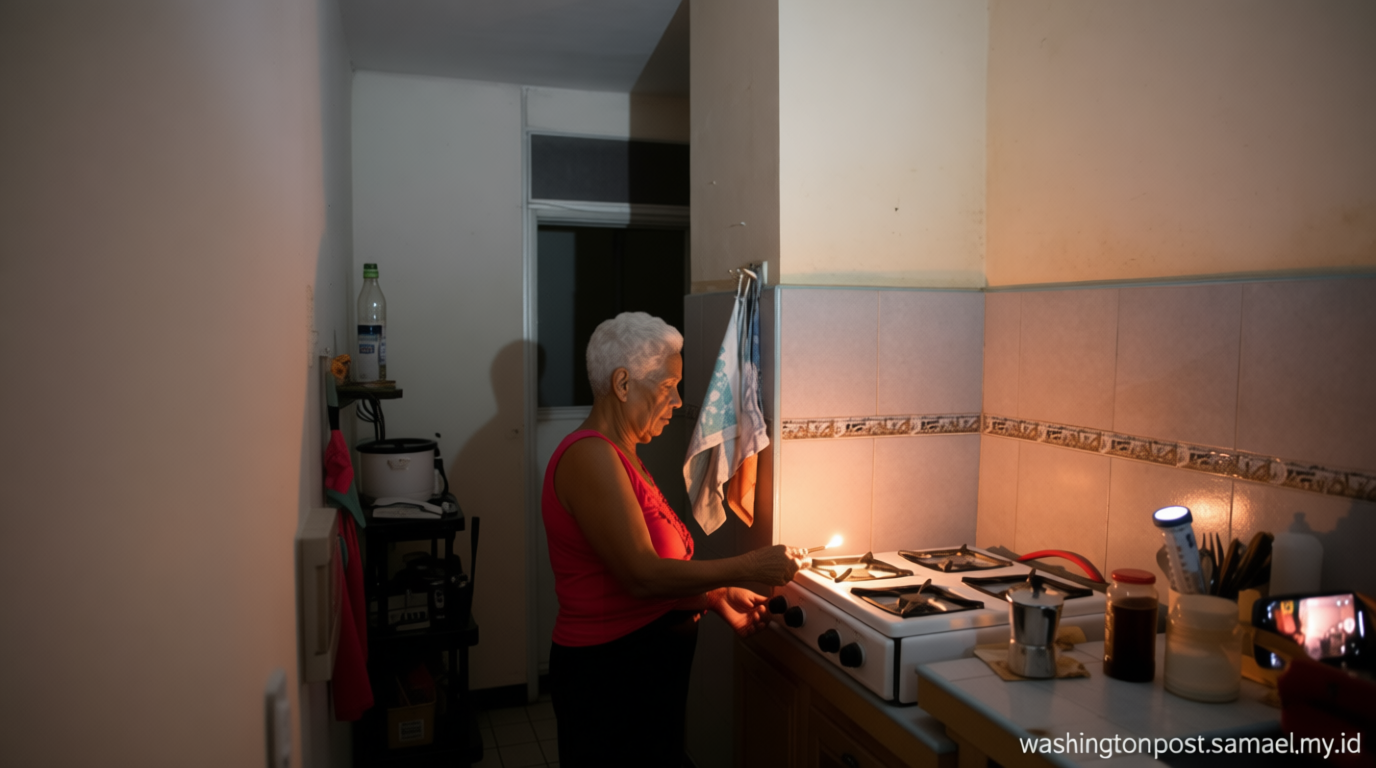
Cuba is going dark under US pressure. How the crisis unfolded and why its troubles are far from over
The Energy Crisis Deepens
Three months into the US-led oil embargo, Cuba faces a deepening energy crisis that is disrupting daily life. Streets in Havana are littered with trash, hospitals struggle to maintain operations, and households rely on wood fires for heating. Power outages, once sporadic, have become a daily reality, with officials acknowledging the severity of the situation.
President Miguel Díaz-Canel highlighted the challenges in a press conference, stating that authorities are actively searching for solutions. However, he admitted that addressing the crisis will require significant effort. The energy shortfall has worsened existing issues, creating a ripple effect across critical sectors.
A History of US Economic Pressure
Since the 1960s, the US has enforced an economic embargo on Cuba, costing the island “trillions of dollars” and hindering overall human development, according to a UN report. Despite global calls to ease sanctions, Washington has intensified pressure in recent months.
In early January, the US cut off Cuba’s primary oil supplier, Venezuela, following a military raid that captured its leader. This move forced the acting Venezuelan government to suspend oil shipments. Soon after, Mexico and other providers also halted supplies, citing US threats of additional tariffs. Havana’s alignment with “hostile countries and malign actors” was cited as the reason, though Cuba dismissed the claim.

Impact on Essential Services
The lack of oil, crucial for vehicles and electricity generation, has worsened Cuba’s long-standing energy woes. Prolonged blackouts have become more frequent, with power plants operating on limited fuel. On Monday, the country endured its first nationwide blackout since the oil embargo began.
Antonio Rodríguez Rodríguez, head of the National Institute of Hydraulic Resources (INRH), noted that fuel shortages are also disrupting water services. The agency is exploring solar panel installations to reduce reliance on the electrical grid. Meanwhile, the Cuban government claims to be boosting domestic production to offset the shortfall.
Protests Erupt Amid Strain
Discontent has led to public demonstrations, a rare occurrence in Cuba. On March 7, residents in Havana gathered to protest, using pots and pans to create noise and lighting bonfires. Days later, students at the University of Havana staged a peaceful rally, citing power and internet cuts as barriers to their education.
A new protest in Morón saw demonstrators partially damaging the Communist Party’s local headquarters. Five individuals were detained, with authorities linking the event to energy and food shortages. Human Rights Watch warned that the electricity crisis is pushing Cuba’s essential services to the brink.
“The humanitarian situation in Cuba was already extremely fragile, but the electricity crisis is pushing many essential services to the limit,” said Juanita Goebertus, Americas director at HRW. “People don’t have reliable access to drinking water, hospitals can’t operate safely, basic goods are becoming increasingly difficult to obtain, and garbage is piling up in the streets.”