


Pakistan’s defense minister says latest clashes with Taliban mean ‘open war.’ What’s happening?
Afghanistan and Pakistan have reignited hostilities, exchanging fierce artillery and mortar strikes along their rugged border. Islamabad’s defense minister declared the situation as “open war,” signaling that Pakistan’s patience has reached its limit. This escalation marks a new phase in a long-standing, intermittent conflict between the nuclear-armed military of Pakistan and the Afghan Taliban, a group with extensive combat experience and a history of defeating international forces.
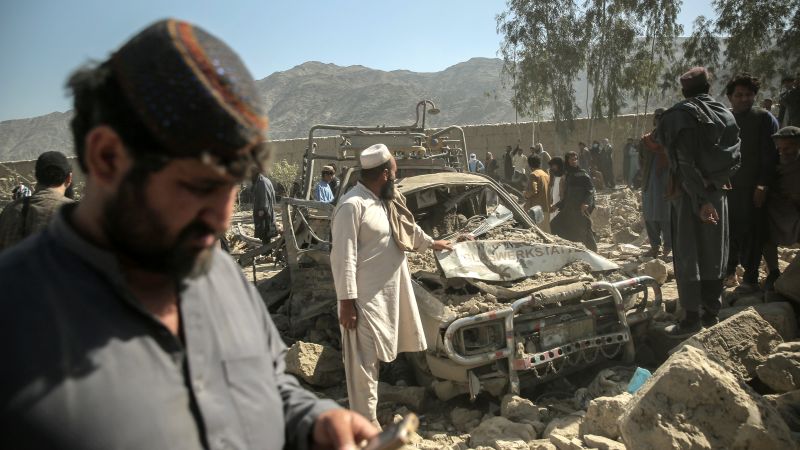
Recent clashes began with the Taliban launching assaults on Pakistani military posts near their disputed and porous border, which spans 1,600 miles through mountainous regions and arid deserts. Kabul attributed these attacks to retaliation for weekend airstrikes by Pakistan on suspected militant bases in Afghanistan, resulting in at least 18 casualties. In response, Pakistan initiated “Operation Righteous Fury,” targeting key areas including Kabul, Paktia, and Kandahar—a symbolic region for the Taliban.
The Taliban reported 19 civilian deaths and 26 injuries in the strikes, according to their deputy spokesperson Hamdullah Fitrat. Pakistan claimed its attacks eliminated 274 Taliban fighters and wounded 400, while Afghan officials stated only 13 soldiers and 22 others were affected. The conflict’s toll continues to diverge, with the Taliban further alleging that Afghan forces killed 55 Pakistani soldiers and seized positions during their counterattacks.
“I was terrified. Then we heard gunfire. When we looked out of our apartment window, we saw bullet-like flames going up in the sky,” said a Kabul resident, who remains unnamed for safety. She described staying awake past 5 a.m., fearing further attacks, as most nearby homes remained lit from the initial explosion.
Pakistan’s information minister, Attaullah Tarar, emphasized the “direct linkages between Afghan Taliban Regime and Terrorism in Pakistan” in a statement. He criticized the Taliban as an “illegitimate regime,” accusing it of fostering cross-border terrorism, institutionalizing slavery, and erasing women’s rights. Meanwhile, Afghanistan’s government spokesman, Zabiullah Mujaid, reiterated the desire for a peaceful resolution, stating, “We have always repeatedly emphasized a peaceful solution, and we still want to find a solution through dialogue.”

The U.S. State Department endorsed Pakistan’s right to defend itself, with Under Secretary Allison Hooker affirming support on social media. Despite shared cultural and economic ties, the nations’ history is marked by volatility. A major confrontation occurred in October 2025, following a fragile ceasefire. Pakistan’s role as a key backer of the Taliban since 2001—when the group was blamed for the September 11 attacks—has shaped decades of tension. However, the Taliban’s recent resurgence has complicated this relationship, with both sides accusing each other of escalating aggression.